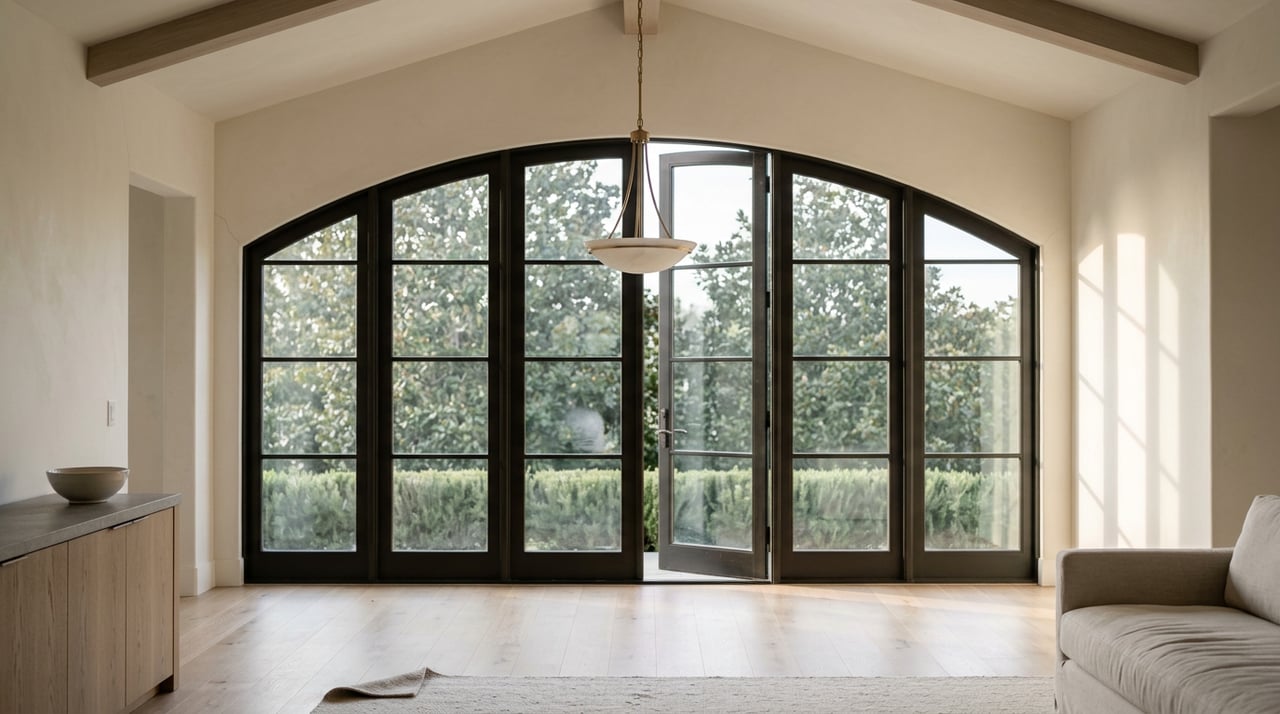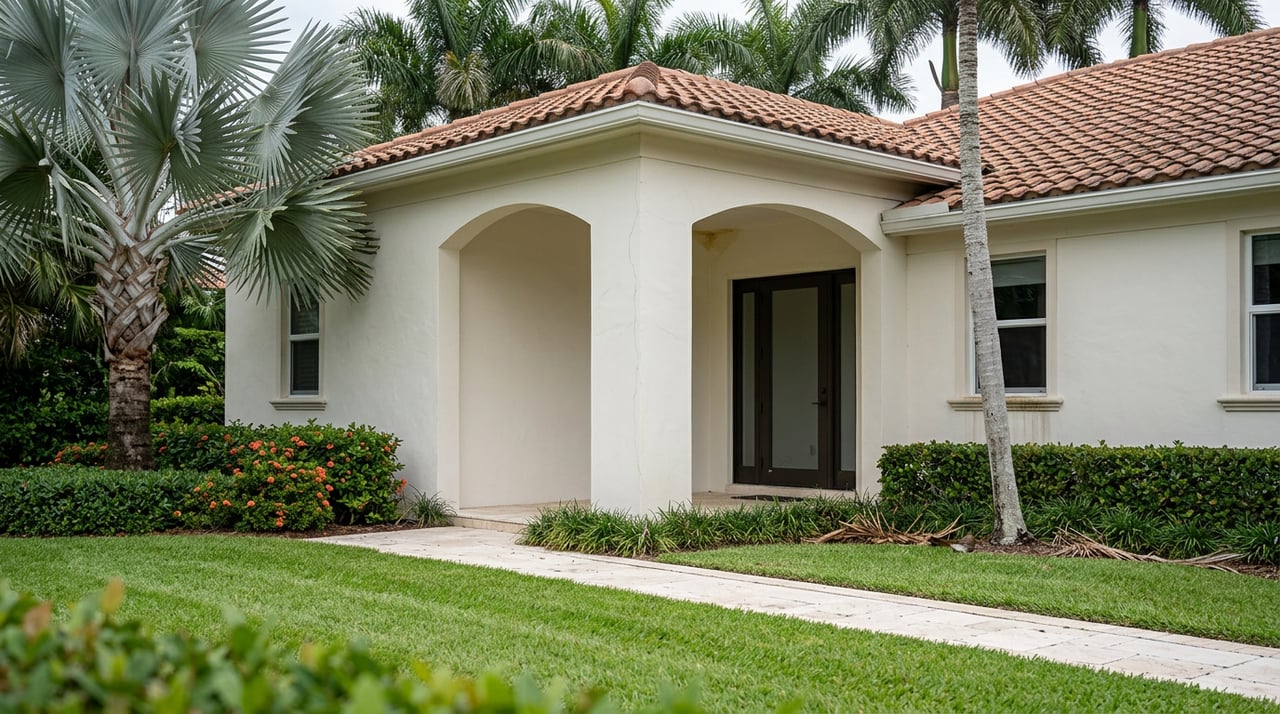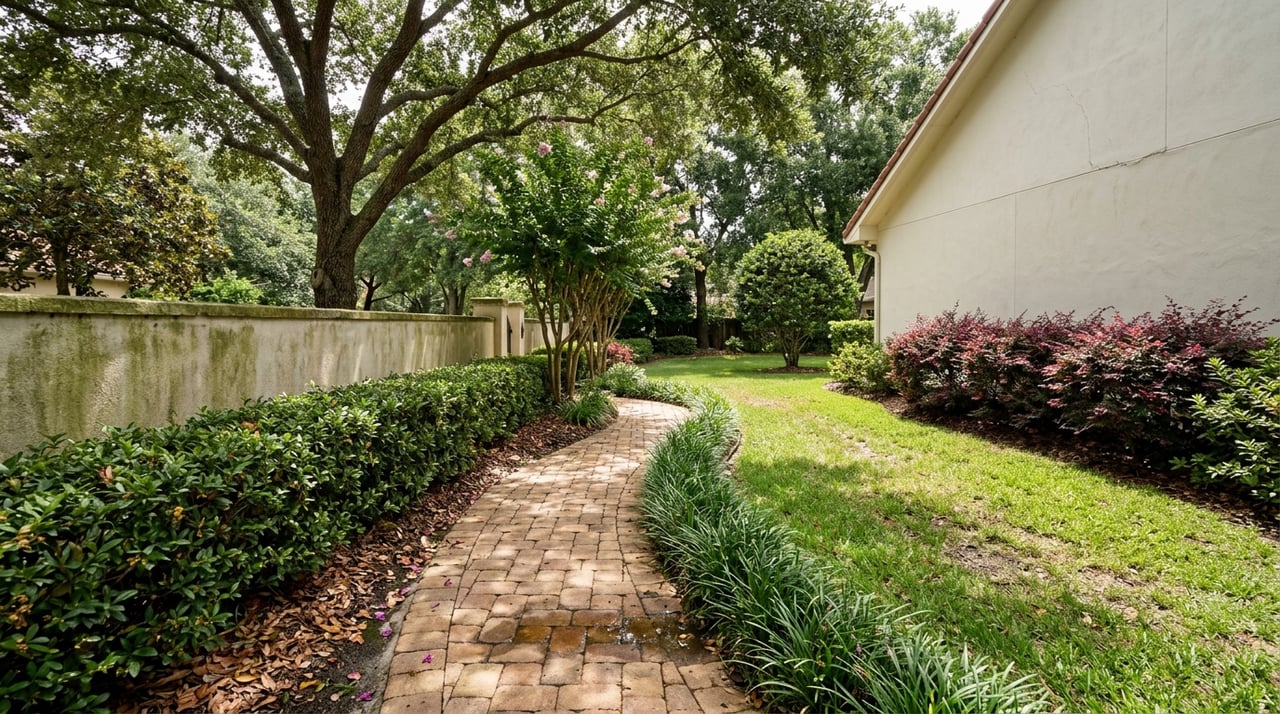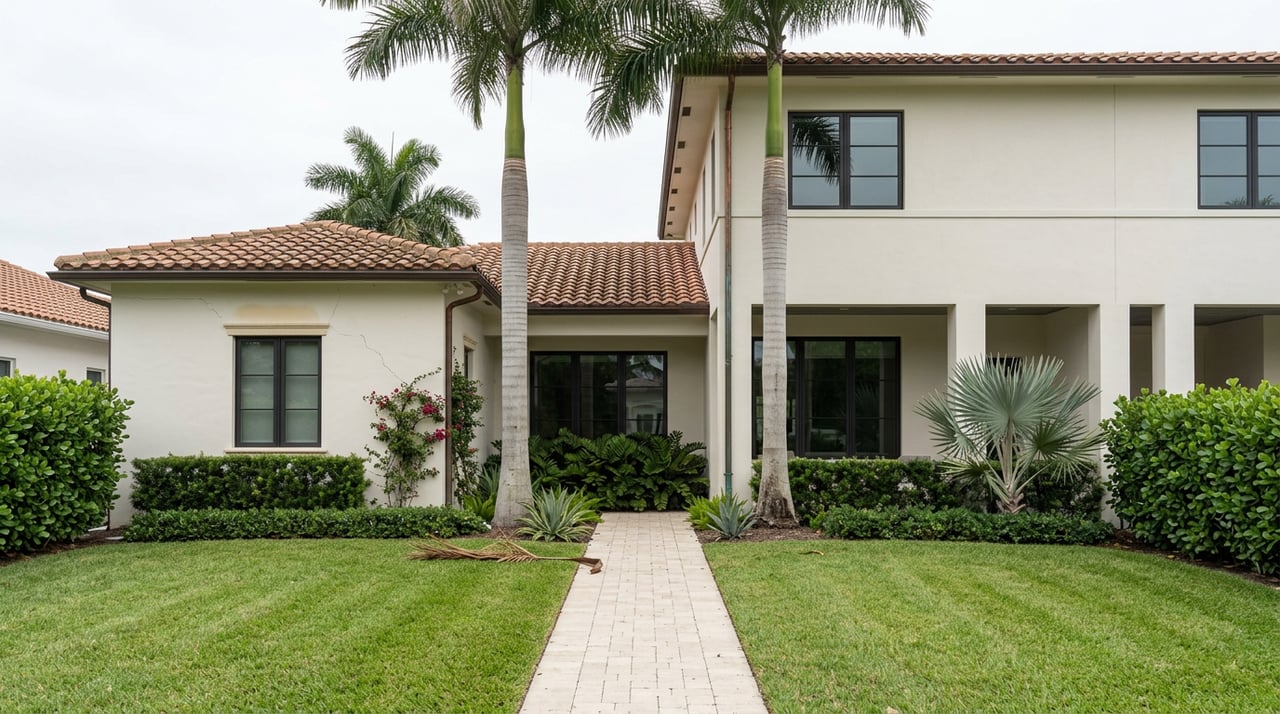
Drive one block in Lake Ida and you can pass a one-story ranch home built the year the neighborhood was platted sitting next to a 2024 custom estate on a double lot with a formal living room and a fireplace. Nobody in Lake Ida is going to stop that from happening. There is no design review committee, no architectural guidelines committee, no board meeting where a homeowner has to defend a roofline. The neighborhood has never had one.
That absence is usually pitched as a perk: no HOA, no monthly fee, no rulebook. It is also the reason Lake Ida prices behave less like a single market and more like several overlapping ones stacked on the same streets.
The Number Nobody's Board Is Managing
Lake Ida was platted starting in 1955, carved into more than 1,200 lots on a quarter-acre minimum, and it has stayed that way for seven decades without a single association enforcing what gets built on any of them. Recent brokerage tracking pulled from the Beaches MLS shows the neighborhood averaging somewhere between $682 and $705 per square foot over the past year through August 2026, with roughly 58 homes changing hands in that window and a list-to-sell ratio around 93 percent.
An average is a flattening device. It takes a 1955 three-bedroom that still needs its systems updated and a freshly built six-bedroom estate on a rare double lot and reports the midpoint as if they belong to the same conversation. One listing currently on the market traces its lineage to the late Delray Beach architect Roy Simon, designed originally for his own brother, and that kind of provenance can move a price further from the average than any square-footage formula predicts. Meanwhile a few streets over, a builder is finishing a brand-new home advertised with a full smart-home package and Bermuda-style architecture on a lot that, ten years ago, held something entirely different.
In a neighborhood with an architectural review board, that spread compresses. In Lake Ida, nothing is compressing it.
What a Guard Gate Actually Buys You
Buyers cross-shopping Lake Ida frequently end up touring guard-gated communities in Boca Raton instead, places like Le Lac, Long Lake Estates, Fieldbrook Estates, and Le Rivage. Those communities charge roughly $1,000 a month in HOA dues, and that monthly number is doing more than paying for a guardhouse.
It is buying predictability. An HOA with design guidelines narrows the distance between what one house on the street looks like and what its neighbor looks like, which narrows the distance between what they sell for. Lake Ida's zero-dollar monthly fee is the flip side of that same coin. Nobody is enforcing a uniform standard, so nobody is narrowing the spread.
| Lake Ida | Guard-gated Boca comps | |
|---|---|---|
| Monthly association fee | $0 | Roughly $1,000 |
| Architectural review | None | HOA-enforced |
| What the fee buys | Nothing, by design | Guardhouse staffing, uniform standards, narrower price variance |
| Renovation and teardown freedom | High, no design board to clear | Limited by association guidelines |
| Block-to-block price consistency | Wide | Narrower |
Neither column is the better deal in the abstract. They are two different products wearing the same zip code. A buyer who wants the freedom to gut a 1955 ranch down to the studs, or tear it down entirely and build something with no committee approval required, is paying for that freedom in the form of a market that won't hand them a tidy, uniform comp.
Why the Days-on-Market Number Hides the Real Story
The 93 percent list-to-sell ratio and roughly 110-day average marketing time look, on their own, like a normal moderately paced luxury market. But those numbers are an average pulled across houses that are not really comparable to each other, which means the pricing discipline required to hit that 93 percent ratio is harder to achieve here than in a neighborhood where every unit shares a builder and a floor plan.
An agent pricing a listing in a guard-gated community with uniform architecture can lean on five recent sales of nearly identical units. An agent pricing a Lake Ida listing is often reconciling a 1955 original, a decade-old renovation, and a brand-new build within a few blocks of each other, none of which map cleanly onto the subject property. The 93 percent ratio suggests sellers here are generally getting priced correctly, but it also suggests the work behind that number is more comp-by-comp than neighborhood-average.
How to Actually Price a Lot Here
If you are evaluating a Lake Ida property, the neighborhood average per square foot is a starting point, not an answer. The more useful exercise is working backward from what's actually on the lot:
- If the structure is a 1955-era original with untouched systems, the land and location are doing most of the pricing work, and the improvement value is closer to zero or negative once a buyer accounts for a full renovation or teardown.
- If the home was renovated within the last decade, the comp needs to be another renovated home of similar vintage, not the neighborhood blended average.
- If the home was built new in the past two years, the relevant comps are other new construction on similarly sized lots, since those homes are competing with each other on finish level and square footage in a way the older stock isn't.
This is also where lot size does more work than it would in a gated community with fixed setbacks. A quarter-acre minimum with no architectural board means a buyer purchasing an interior lot with an original structure is functionally purchasing land and location, with the house itself treated as a placeholder or a renovation project depending on condition.
A Few Questions That Come Up
Does no HOA mean there are no rules at all? Delray Beach still applies its own zoning and building code to any renovation or new construction in Lake Ida. What's missing is a private association layer reviewing aesthetics or enforcing uniform standards beyond what the city already requires.
If there's no HOA, who maintains the parks and common areas? The neighborhood's shared green space and walking paths are handled through the city rather than a private association, which is part of why there's no monthly assessment tied to the address.
Does the lack of an HOA affect financing or insurance? It can, mainly because a lender or insurer evaluating a Lake Ida property is looking at that specific structure's age and condition rather than a uniform community-wide standard, which is one more reason the individual house matters more here than the neighborhood average does.
Lake Ida rewards buyers who price the house in front of them rather than the neighborhood behind it. If you're trying to figure out what a specific Lake Ida lot or listing is actually worth once you separate it from the average, Florida 360 Group can walk the comps with you street by street, not just neighborhood-wide.